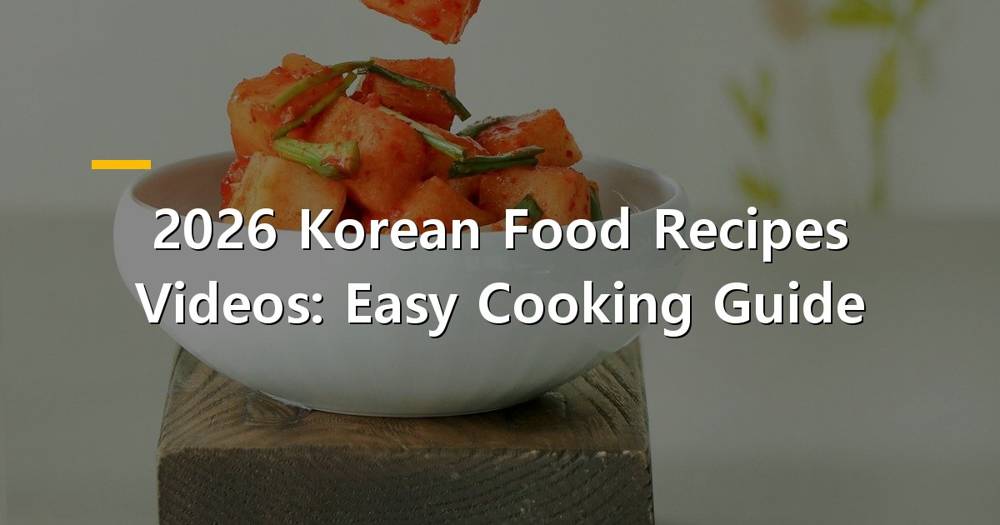
2026 Korean Food Recipes Videos: Easy Cooking Guide
Hey there, fellow food lovers! If you're anything like me, you've probably found yourself mesmerized by the vibrant flavors and beautiful presentation of Korean cuisine. For years, I've been on a journey to master some of my favorite Korean dishes, and let me tell you, stumbling upon excellent Korean food recipes videos has been an absolute game-changer. In 2026, the world of online cooking content is richer than ever, and I'm thrilled to share with you how you can dive into the delicious world of Korean cooking right from your own kitchen.
Whether you're a total beginner or already a seasoned home cook, this guide is packed with tips and resources to help you find fantastic Korean food recipes videos that will make your taste buds sing. Get ready to explore everything from comforting stews to fiery stir-fries and delightful street food!
Why Korean Food Recipes Videos are Popular in 2026
Korean food has exploded in popularity over the last decade, and it's not slowing down. Think about it: the kimchi, the bulgogi, the bibimbap – these dishes are not just food; they're cultural experiences. In 2026, we're seeing a huge demand for authentic, accessible recipes, and Korean food recipes videos are the perfect medium to deliver that. They offer a visual, step-by-step guide that’s way more engaging than just reading a recipe card.
Honestly, I used to be intimidated by the long ingredient lists sometimes found in Korean cooking. But watching someone expertly chop garlic or perfectly fold dumplings in a video makes it seem so much more manageable. It demystifies the process.
The visual aspect is key. Seeing the texture of the sauce, the sizzle of the meat, or the exact moment to add an ingredient helps tremendously. Plus, many creators share personal tips and cultural insights that you just don't get from a written recipe.
How to Find the Best Korean Food Recipes Videos
With so much content out there, finding truly great Korean food recipes videos can feel like searching for a needle in a haystack. But don't worry, I've got a few strategies that have worked wonders for me.
First off, YouTube is your best friend. Search for terms like "Korean food recipes videos," "easy Korean cooking," or specific dish names. Look for channels with high subscriber counts and consistently good engagement (likes, comments). Channels that focus solely on Korean cuisine often have the most authentic and detailed content.
Pay attention to the quality of the video and audio. Clear instructions and good lighting make a huge difference. Also, check the comments section! Viewers often share their experiences, tips, or even modifications to the recipe, which can be incredibly valuable. I always scan the comments to see if people found it easy to follow.
Another great resource is dedicated food blogs that embed their video tutorials. These often have well-written accompanying articles with ingredient lists and helpful notes that complement the video perfectly. Don't underestimate the power of a good blog post combined with a video!
Finally, try searching on platforms like Instagram or TikTok for shorter, quicker recipe ideas. While not always full-length, these platforms can introduce you to amazing Korean food cooking videos and trends.
Pro Tip: Look for creators who explain the *why* behind certain steps or ingredients. Understanding the purpose of a technique makes it easier to replicate and adapt.
Must-Try Korean Dishes from Cooking Videos
If you're just starting your Korean food journey, there are a few iconic dishes that are absolutely essential to try. These are often featured in many Korean food recipes videos because they are so beloved.
Kimchi Jjigae (Kimchi Stew): This is the ultimate comfort food for many Koreans. It's a spicy, savory stew made with aged kimchi, pork or tofu, and vegetables. Watching how to balance the flavors in a kimchi jjigae video is key.
Bulgogi (Marinated Grilled Beef): Sweet, savory, and incredibly tender, bulgogi is a crowd-pleaser. The marinade is crucial, and videos show you the perfect balance of soy sauce, garlic, sesame oil, and pear. I love seeing how different creators prepare their marinade.
Bibimbap (Mixed Rice with Vegetables): This visually stunning dish involves rice topped with various seasoned vegetables, meat, a fried egg, and gochujang (chili paste). Videos are great for learning how to prepare each component perfectly and how to arrange them beautifully.
Japchae (Glass Noodles Stir-fry): Sweet potato glass noodles stir-fried with vegetables and sometimes meat, seasoned with soy sauce and sesame oil. The technique for cooking the noodles and getting that signature chewy texture is best learned from a video.
Exploring Korean Simple Food Recipes
Sometimes, you just want a delicious Korean meal without spending hours in the kitchen. That’s where Korean simple food recipes come in handy, and thankfully, there are tons of fantastic Korean food recipes videos dedicated to them.
One of my go-to simple recipes is Gyeran Mari (Rolled Omelette). It’s incredibly easy to make, looks impressive, and is perfect as a side dish or even a light meal. Videos show you the technique for rolling it perfectly without breaking.
Another gem is Kongnamul Muchim (Seasoned Soybean Sprouts). It requires just a few ingredients and a few minutes. The video tutorials focus on achieving the right texture for the sprouts – not too mushy, not too crunchy.
Don't forget about Dubu Jorim (Braised Tofu)! This dish is so satisfying and can be on your plate relatively quickly. Watching the braising process in a video helps you understand how to get the tofu nicely flavored and tender without falling apart.
These simpler recipes are perfect for busy weeknights and are a great way to build confidence in your Korean cooking skills. They prove that authentic Korean flavors don't always require complex steps.
Dive into Korean Street Food Cooking Videos
Korean street food is legendary, and if you can't make it to Seoul, the next best thing is to recreate it at home! Korean street food cooking videos are incredibly popular because they capture the fun, vibrant, and often surprisingly easy-to-make nature of these snacks.
Tteokbokki (Spicy Rice Cakes) is probably the king of Korean street food. Watching Korean food cooking videos that feature tteokbokki is a must. You’ll learn the secret to the chewy rice cakes and the perfect balance of sweet, spicy, and savory gochujang sauce. Some videos even show you variations with cheese or seafood!
Then there’s Eomuk (Fish Cakes). Often served on skewers in a flavorful broth, eomuk is simple yet addictive. The videos are great for seeing how to prepare the broth and how the fish cakes are typically presented.
Hotteok (Sweet Pancakes) are another delightful treat. These sweet, filled pancakes are perfect for a dessert or a sweet snack. The videos demonstrate the folding and pan-frying technique to achieve a crispy exterior and gooey, sweet interior.
Exploring Korean street food cooking videos is like taking a culinary tour without leaving your kitchen. It’s an exciting way to experience a different facet of Korean cuisine.
A Word of Caution: Some authentic Korean recipes can be spicy! If you're sensitive to heat, look for videos that offer tips on adjusting the spice level or opt for milder dishes when you start.
Tips for Success in Your Korean Cooking Journey
Embarking on a Korean cooking adventure is incredibly rewarding. To make your experience as smooth and enjoyable as possible, here are a few tips I've picked up along the way, many of which I learned directly from watching Korean food recipes videos.
Invest in Key Ingredients: Make a trip to your local Asian grocery store or a well-stocked supermarket. Essential ingredients like gochujang (Korean chili paste), gochugaru (Korean chili flakes), soy sauce, sesame oil, garlic, ginger, and doenjang (fermented soybean paste) will open up a world of recipes. Don't be afraid to buy smaller portions if you're unsure, but trust me, you'll use them!
Prep Like a Pro: Many Korean dishes involve multiple components. Before you start cooking, especially when following a video, take the time to chop all your vegetables, measure your sauces, and prepare your meats. This 'mise en place' makes the actual cooking process much less chaotic and more enjoyable.
Don't Fear Fermentation: Kimchi and doenjang are fermented, and their complex flavors are what make Korean food so unique. Embrace them! If you're hesitant, start with recipes that use smaller amounts or milder versions.
Taste and Adjust: This is crucial for any cooking, but especially for Korean food. Most videos will tell you to taste and adjust seasoning. Does it need more salt? A touch more sweetness? A bit more spice? Trust your palate. This is where personal preference really shines.
Practice Makes Perfect: Don't get discouraged if your first attempt isn't perfect. Cooking is a skill that improves with practice. Every time you follow a Korean food cooking video, you'll learn something new.
| Dish Category | Popularity | Ease Level (Video Dependent) | Key Ingredient |
|---|---|---|---|
| Main Dishes (e.g., Bulgogi) | High | Medium | Meat (Beef/Pork) |
| Stews (e.g., Kimchi Jjigae) | Very High | Medium | Kimchi |
| Noodle Dishes (e.g., Japchae) | High | Medium-Hard | Glass Noodles |
| Street Food (e.g., Tteokbokki) | Very High | Easy-Medium | Rice Cakes, Gochujang |
| Simple Sides (e.g., Kongnamul Muchim) | High | Easy | Bean Sprouts |
Frequently Asked Questions
Look for established YouTube channels with high engagement, clear instructions, and good production quality. Also, check food blogs that embed video tutorials for a comprehensive guide.
Yes, many Korean simple food recipes are designed for quick preparation with fewer ingredients, making them very accessible for home cooks of all skill levels.
Gochujang is a thick, fermented chili paste with a sweet and savory flavor, while gochugaru is Korean chili flakes, used for adding heat and color.
For many core dishes, yes. Key items like soy sauce, sesame oil, garlic, and ginger are widely available. However, specialty items like gochujang, gochugaru, and doenjang are best found at an Asian market for authentic flavor, though many larger supermarkets now stock them.
Ready to Cook Some Amazing Korean Food?
Don't just watch – start cooking! Use these Korean food recipes videos as your guide and unlock a world of delicious flavors.
Personally, I've found immense joy in learning to cook Korean food. It's more than just following recipes; it's about connecting with a culture and sharing delicious meals with loved ones. I hope these Korean food recipes videos have inspired you to get into the kitchen and try something new.
What are your favorite Korean dishes to cook or watch being made? Share your thoughts and any video recommendations in the comments below! Let's keep the conversation going and discover even more culinary delights together.
